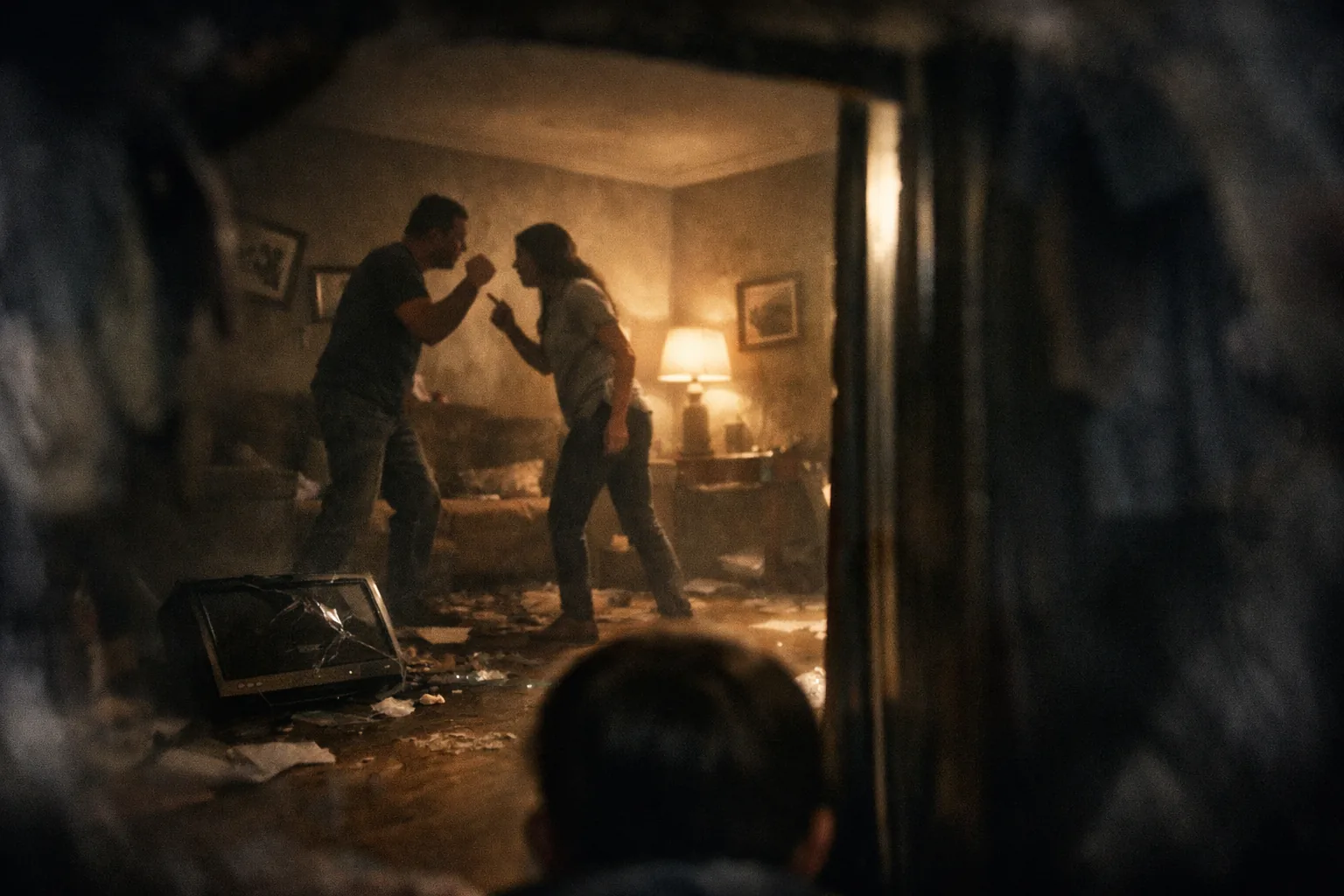
or: why being locked in a dark closet as a child may have given you a career path
I hate gatekeepers. Gatekeeping is about ego, about making yourself feel special. It’s about standing above the huddled masses and sneering down at them. Reality rarely agrees with you.
Some gatekeeping fuck published a note this week: not everyone who puts words on a page is a writer. Real writers have innate talent, a gift, a particular spiritual vision. The untrained are aspirational at best, hopeless scribblers at worst.
I joke that writing is cheaper than therapy. Here is why that line rings true.
The Cost of Being a Writer
He’s not entirely wrong. There is a psychological profile. Writers do tend to be people who can’t look away: from the pain, from the gap between what people say and what they mean. That compulsive attention is real, and not everyone has it.
But here’s what this guy gets wrong: he implies the profile is something you’re born with. I think it’s something the world builds into you whether you asked for it or not.
Look at where it comes from. Trauma. Displacement.
Growing up in a house where you had to read the room to stay safe. The particular education of being someone the world didn’t expect much from.
The hypervigilance that makes a writer notice what everyone else walks past was originally a survival mechanism. The compulsive meaning-making was how someone metabolized experiences that didn’t make sense. The need to put it on the page is the need to make it witnessed. That’s adaptation, not gift.
There’s probably a baseline temperament the circumstances have to work with. Two kids grow up in the same dangerous house, and one becomes a writer while the other closes off entirely. But temperament is table stakes, not a credential. Plenty of people have the sensitivity without ever doing the work.
What he’s calling “spiritual vision” has a clinical name. The hypervigilance, the compulsive observation, the inability to stop processing, the need to make meaning out of experiences that don’t resolve... those are Complex Post-Traumatic Stress Disorder (CPTSD) markers. He’s describing trauma survivors and calling it a gift.
CPTSD isn’t a gift. You can return a gift. (I wrote about this more directly here.)
You learned to read micro-expressions because missing one had consequences. You learned body language because words weren’t safe to trust. You developed the ability to feel a room shift before anything was said because that half-second warning mattered.
The writer’s toolkit: noticing what people don’t say, reading the subtext, sensing the gap between the performed emotion and the real one. That’s a nervous system that got trained the hard way.
If CPTSD is the admission requirement for the sacred category, I would love to have never crossed that threshold. The velvet rope isn’t protecting craft. It’s protecting a club whose members mostly wish they’d never qualified.
-
Hemingway drove an ambulance on the Italian front at eighteen and came home with two hundred pieces of shrapnel and a war that never left. His father died by suicide in 1928, with a Civil War pistol. The alcohol was the symptom.
-
King’s father walked out when he was two years old. He grew up poor, and spent the 1980s so deep in cocaine and alcohol he doesn’t remember writing several books. His family staged an intervention and emptied the evidence onto a table: bottles, pill containers, all of it. The addiction was the symptom.
-
Maya Angelou was raped at eight years old by her mother’s boyfriend. The trauma rendered her selectively mute for five years. In the silence, she read everything she could find and developed a relationship with language that would carry her for the rest of her life. The wound became the work.
-
Baldwin grew up Black, poor, and gay in mid-century Harlem. Every one of those is a separate education in reading rooms that wanted him gone. The hypervigilance that makes his prose so precise wasn’t craft school. It was survival.
That’s the approved list. That’s what it cost. Still want in?
Craft Is Learnable
The wound doesn’t write itself. Having the lamentable mental architecture for writing, that depth of character understanding: it gets you the material, not the ability to put it on the page.
No one is born with an innate understanding of spelling and grammar. Stringing sentences together with meaning is not easy, even when you understand the character. The mechanics have to be learned.
Luckily, every mechanical element of the craft can be taught. How to construct a sentence with weight. How to control pacing. How to write dialogue that sounds like speech without actually being speech.
Some of it you can learn in a Master of Fine Arts (MFA) program. Most of it you can learn better and cheaper from a library or Amazon. Spending six figures on an MFA is just buying an anchor to the starving artist mythology.
I’ve watched it happen in my own work. The gap between what I wrote five years ago and what I write now is not a gap of experience, it’s reps. The experience was always there. The craft had to be built.
What Actually Makes a Writer
A writer is the sum of everything they paid attention to. The jobs, the losses, the places, the people they couldn’t stop watching. The things that happened that they couldn’t stop thinking about afterward.
And then the reps. The thousands of bad sentences that had to happen before the good ones started showing up. The failed drafts. The things that almost worked.
The wound becomes the work, eventually. If you do the reps.
Nobody was born with a golden pen in their hand. Writers are formed by the world, by the work, by the refusal to stop when it would have been easier to stop.
The 30-subscriber scribbler he’s sneering at is paying tuition. The school is open to anyone willing to stay enrolled.
You may also like: - The Fear Tax - Trauma and You - Have Some Standards When You Use AI to Write