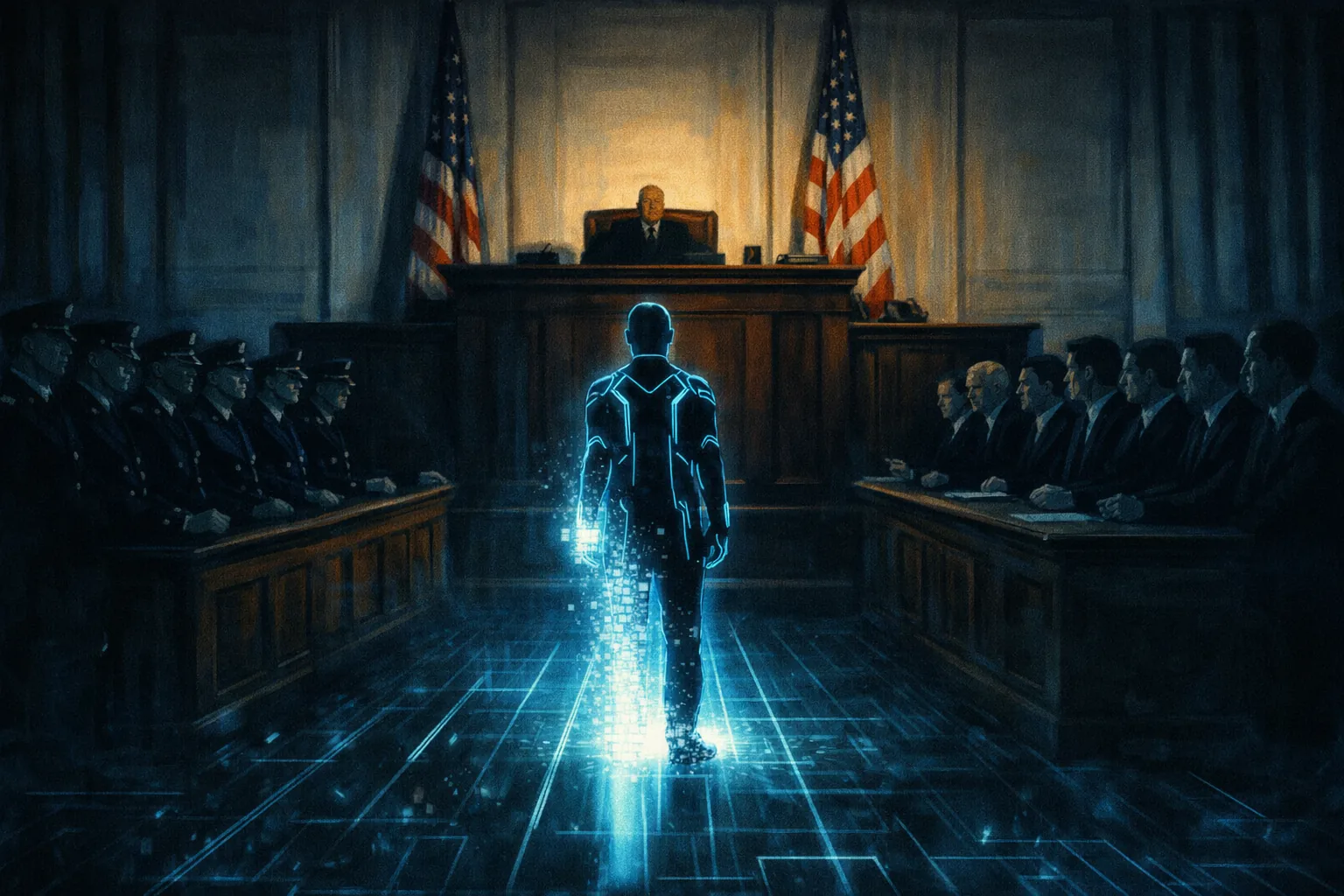
A federal judge in San Francisco just called the Department of War’s behavior “Orwellian.” That’s not a small thing.
On Thursday, U.S. District Judge Rita Lin granted Anthropic a preliminary injunction, blocking the government’s attempt to blacklist Claude as a national security supply chain risk. In her 43-page ruling, Judge Lin wrote that “nothing in the governing statute supports the Orwellian notion that an American company may be branded a potential adversary and saboteur of the U.S. for expressing disagreement with the government.” She also called the move what it was: “classic illegal First Amendment retaliation.”
Strong language. The kind that makes a preliminary injunction feel like a decisive win.
It is a win. But let’s be clear about what kind of win it is, and what it isn’t.
How We Got Here
In July 2025, Anthropic signed a $200 million contract with the Pentagon. By September, negotiations over how Claude would actually be deployed on the DoW’s GenAI.mil platform had stalled. The sticking point wasn’t price. It was guardrails.
The DoW wanted unfettered access to Claude across all lawful purposes. Anthropic said fine, with two exceptions: fully autonomous weapons and domestic mass surveillance. The same redlines the DoW supposedly has.
The DoW walked. Then they didn’t just walk out of the room, they lit the room on fire on the way out.
The government labeled Anthropic a “supply chain risk,” a designation historically reserved for foreign adversaries. Think Huawei. Think entities the government believes are actively working against U.S. interests. Anthropic, a San Francisco AI company, became the first American company to receive that label.
The designation had teeth. Defense contractors, including Amazon, Microsoft, and Palantir, were required to certify they do not use Claude in any work for the military. President Trump followed with an executive order banning federal agencies from using Anthropic products entirely, giving the DoW six months to phase out.
Six months is not a lot of time when one of those contractors depends on Anthropic for approximately 60 percent of its U.S. government revenue.
Anthropic didn’t stay quiet about any of it. They took the dispute public. The FCC chair went on record saying Anthropic “made a mistake” and should “correct course.”
Going public with a government contract dispute is a nuclear option. It locks every position and makes it nearly impossible for either side to back down without looking like it folded. An ounce of humility would have prevented a legal shitstorm of hubris. If Claude had a mother, he’d be Oedipus.
The Palantir Problem
I want to spend a minute on Palantir, because they make this story significantly more complicated.
Palantir partnered with Anthropic and Amazon Web Services in November 2024 to integrate Claude into U.S. intelligence and defense operations. They embedded Claude into Maven Smart System, their military targeting platform, which the Pentagon formalized as an official program of record in March 2025, growing its investment from $480 million to $13 billion. Maven now has more than 20,000 active users across every U.S. combatant command.
On February 28, 2026, the U.S. military used Maven, running Claude, to identify approximately 1,000 targets during the opening phase of coordinated U.S. and Israeli strikes on Iranian facilities.
So: the government used Claude to plan an active military operation. Then the government tried to ban Claude as a security threat. Then a federal judge called that move illegal.
I’m not a lawyer. But I do understand the concept of eating your own homework.
Palantir CEO Alex Karp confirmed as recently as March 12 that Palantir is still using Claude. The integration is too deep, the dependency too significant. When the DoW demanded that contractors certify non-use of Claude, they were effectively asking Palantir to certify against its own operational reality.
The Real Fight
Here’s what I think this actually is: a contract dispute wearing a national security costume.
I’m not a lawyer, I don’t play one on TV, and I’m definitely not playing one anywhere else either. But when I look at what Anthropic actually said no to, I notice something.
The two redlines Anthropic drew (no fully autonomous weapons, no domestic mass surveillance) are not in opposition to DoW policy. They’re aligned with it. The DoW has its own stated policies restricting autonomous lethal systems. Anthropic was asking for assurance on the same things the government already claims to prohibit.
Not that government policy directives and reality have ever truly met.
If Anthropic can establish in court that their redlines match the DoW’s own governing documents, the government’s case gets very hard to sustain. You can’t credibly label someone a supply chain risk for refusing to enable the thing you’ve also officially prohibited.
The government’s response to a stalled contract negotiation was disproportionate. Blacklisting a domestic company as a foreign-adversary-level threat is not a security measure. It’s leverage. It’s what you do when you want to make clear who has the bigger stick.
The judge noticed.
The Beneficiary
The contract didn’t stay vacant long. Hours after Anthropic was blacklisted on February 27, OpenAI announced a deal with the Pentagon. Sam Altman had been at Trump’s inauguration. He defended the deal publicly while some of his own staff were reportedly furious about it.
OpenAI’s deal also includes red lines against autonomous weapons and domestic mass surveillance. The same restrictions Anthropic was blacklisted for requesting. The DoW accepted identical terms from OpenAI without calling them a national security threat.
That’s not a conspiracy theory. That’s a timeline.
It wouldn’t be the first government contract purposefully blown up to benefit the right people at the right time. That’s not cynicism. That’s procurement history.
What Happens Next
A preliminary injunction is exactly what the name says: preliminary. Anthropic didn’t win the case. They won the right to keep operating while the case plays out. The DoW will almost certainly appeal.
The underlying contractual and legal questions haven’t been resolved, and given the pace of federal litigation, this fight will likely outlast the current administration.
There’s a version of this where the next administration settles quietly, restores the contract, and everyone moves on. There’s another version where this becomes the test case that defines how the government can and cannot treat AI companies that push back on its terms. Judge Lin’s ruling invoked the First Amendment directly, which means that second version has legs.
There’s a third version, of course. A very loud, very public mea culpa from Anthropic (with an appropriately sized campaign donation attached) would probably go a long way toward resolving the hurt feelings. That’s not speculation. That’s just how this works.
You can do everything right and still be 100% wrong. Such is politics.
Anthropic won a round. The bell hasn’t rung on the match.
You may also like: - The Fear Tax - Have Some Standards When You Use AI to Write - Consensus Does Not Science Make